by
Giuseppe
/
Here is what a day in a restaurant taught us about the software we make, and about the work it is supposed to disappear behind.
For one service, the people who build Tebi put down their laptops and picked up the job itself. We took the bookings, worked the pass, ran the bar, and closed the till. Here is what the day taught us about the software we make, and about the work it is supposed to disappear behind.
A lot of people at Tebi come from hospitality. They have worked the floor, run the pass, and closed the till at two in the morning, and that experience is a large part of why we are building Tebi in the first place. But not all of us carry that history. Some of us, like me, have only sat in front of the pass, always an observer of good service, but never really understanding what it takes to deliver it.
That's where last night's idea came from.
When your days are spent shipping features and writing release notes, a restaurant slowly turns into an abstraction: a set of screens, a flow diagram, a list of jobs to be done. It's easy to forget what you're building for. So we stopped describing it and went and did it.
The owners of September Amsterdam, a neighbourhood restaurant that has run on Tebi for years, handed us the keys on a day they were closed. We split into the roles a restaurant actually runs on: an owner watching the numbers, a reservation manager working the book, front of house on the floor, and a kitchen and a bar behind the pass.
Nobody handed us a shortcut. We had to write the menu, order the ingredients, set up the mise en place, plate the food, pour the drinks, clear the tables, and clean the room at the end of the night. The tech did not do any of that, and it could not. That was the first thing the day made honest.
The job is hard, and no dashboard captures it
Running a restaurant is hard in a way that no report on a screen will ever show you. Mise en place takes hours before a single guest walks in. The dinner rush arrives all at once, and it does not care that you are new to it. A dropped plate, a table that runs long, a party of six on a walk-in when the kitchen is already deep in orders: these are the moments that make the job what it is. By the time we wiped down the pass and stacked the last chair, we understood something we say often but had never felt in our own hands. The work is the people, the room, and the food. Everything else is supposed to get out of the way.
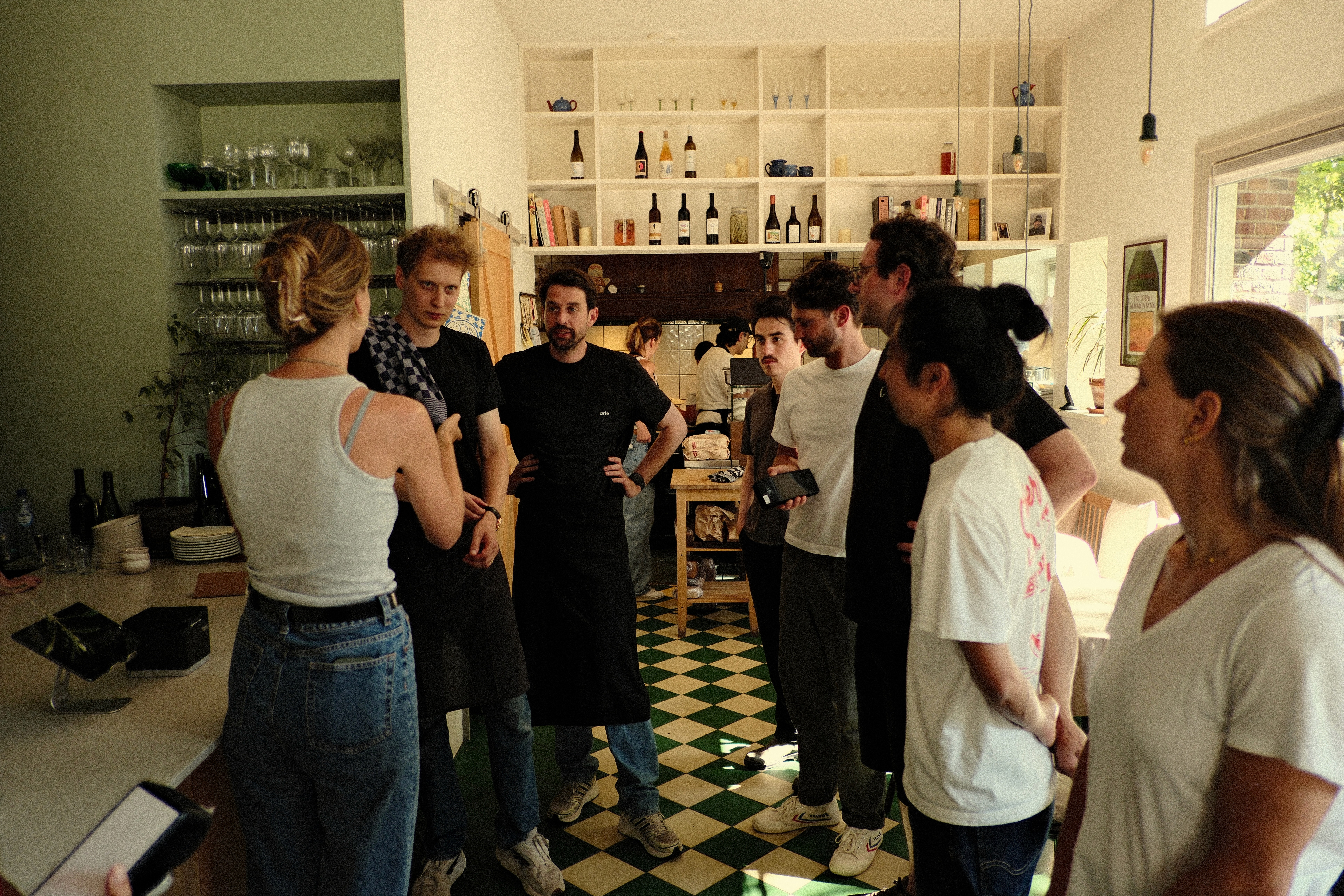
On the shifts that went well, we never thought about the software at all. The moment any one of us was thinking about the POS, or hunting for an order, or wondering whether a booking had actually made it through, something had already gone wrong. Good tools have a strange quality. When they work, you do not notice them. You only notice a system when it fails you, and a restaurant in the middle of service cannot afford to notice anything except the guests.
That is the bar we hold ourselves to. The point is not that the software is clever, but that you forget it is there.
One table, from the booking to the bill
The reason we could forget about it is that everything was connected. Follow a single table through the night and you can see the thread run the whole way.
Our guests –– friends and family –– booked directly through our website ever landing on a separate site. That reservation appeared in the same agenda our reservation manager was already working in, sitting alongside the walk-ins and the waitlist. Because each guest chose a service when they booked, either snacks or the full dinner, the kitchen knew what it was prepping for before anyone sat down, including allergies and dietary preferences.
At the table, the fixed menu went in as a single bundle, so front of house did not ring in five separate courses by hand. One tap sent the order to the pass, where it split itself in two. Food went to the kitchen display and drinks went to the bar display, and each screen showed only the work that station had to make. Allergies and modifications travelled with the order, so nobody had to shout them across the room or trust that they would be remembered.
As each course went out, the kitchen tapped it served on the display, and front of house could read a table's progress at a glance instead of walking back to the line to ask. The room and the pass stayed in the same conversation all night.

When the guests were ready, the bill was already itself. Everything they had ordered was on it, and taking payment closed the table in the same system that had opened it with a booking hours earlier. The table was connected from first booking to final bill, with no re-entering, no reconciling, and nothing waiting on a second screen.
At the end of the night, the owner did not have to rebuild the shift from three different exports. It was one number, and underneath it, the detail: what sold, what did not, how long tables turned, and where the evening actually made its money.
Why the tech should be the easy part
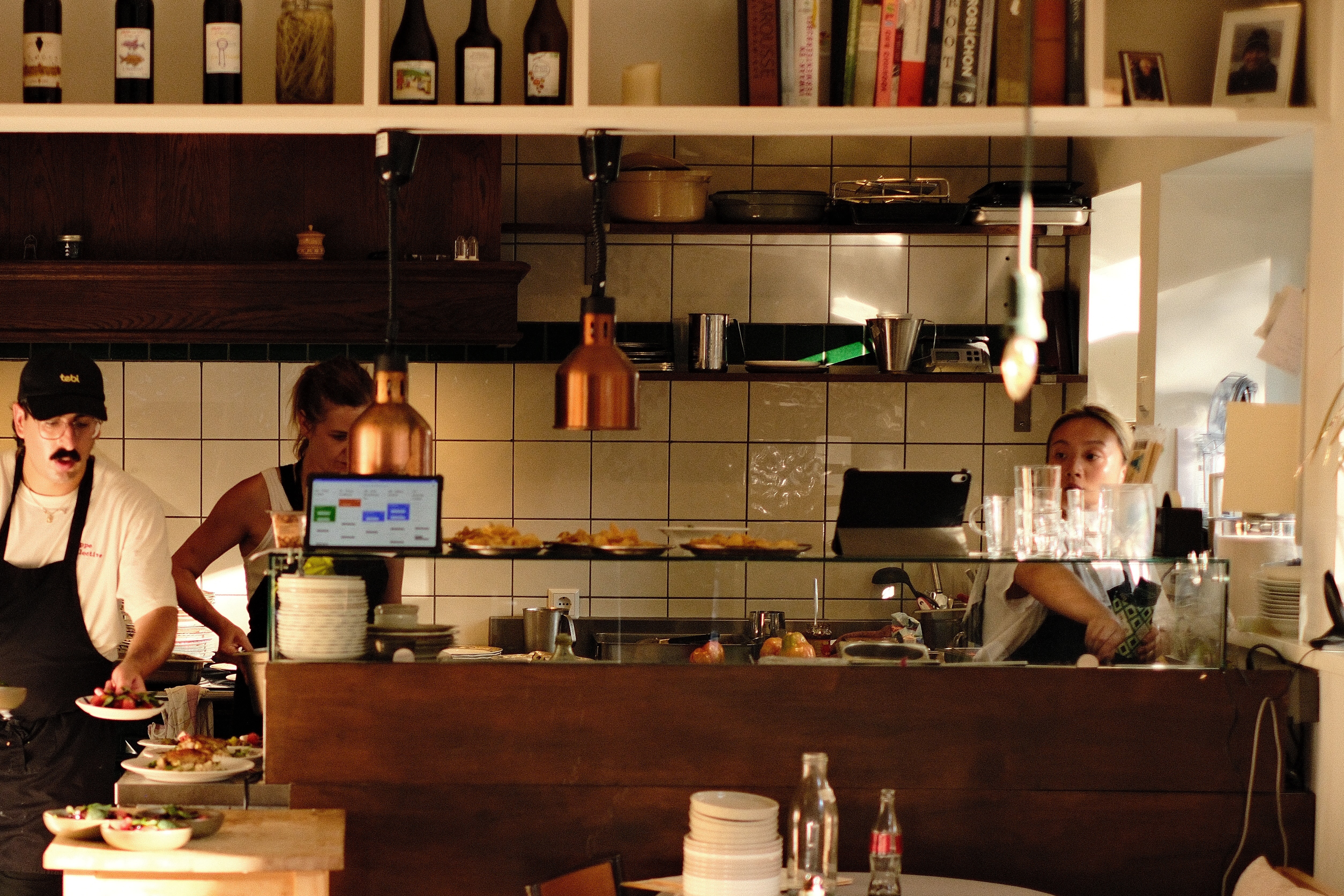
We build all of this, and still the lesson of the day was not really about any single feature. It was that the work is hard enough on its own. A restaurant is a physical, human business, and it deserves tools that ask nothing of the person using them in the middle of a rush.
The last thing you should think about during service is your tech. That is not a line we came up with at a desk. It is what a full day on the floor made obvious. When the booking, the floor, the kitchen, the bar, the payment, and the numbers all live in one connected system, the system goes quiet and the service flows, and you are left free to do the actual job: cook the food, run the room, and look after the people in front of you.
Running a restaurant is hard enough. That is exactly why the tech should be the easy part.
See what a connected system feels like in service. Talk to us.
About Tebi
Tebi is building the first Connected Restaurant Operating System that makes hospitality flow, bringing POS, Reservations, Kitchen Display, Payments, Insights, and Inventory into one system so operators can run service without juggling apps or worrying about surprise fees. Running a restaurant is hard enough. Tebi makes it easier.