
by
Tebi
/
At Esra, reservations, guest requests, and kitchen notes all flow through Tebi Inbox.
Esra is a 30-seat restaurant in Amsterdam, run by co-owners Stephanie and Selin alongside a small, close-knit team. Stephanie walks through a night at Esra, following a guest message as it travels from the initial reservation to the kitchen and back again to the guest's profile, ready to be picked up on their next visit.
The venue
Selin, Esra's chef and co-owner, draws on her North Cypriot background, letting Mediterranean and Turkish influences run through the menu without ever settling into one fixed style — an approach Stephanie describes as entirely intentional, since Selin has never wanted to be pigeonholed. The wine list follows the same instinct, leaning Turkish as well, so that guests are often discovering the wine and the region together, alongside the food, for the first time.
The room seats a maximum of 35, and Stephanie has always wanted it to feel like a home, where service runs with just four people, two on the floor and two in the kitchen.
That same instinct for hospitality shows up in the small details, too. Stephanie sends a personal confirmation the morning of each reservation, usually over WhatsApp, because she wants every guest to feel expected before they've even walked through the door.
It showed up in a small emergency as well: one guest texted her three hours before their reservation to say it was their anniversary and that they'd forgotten to bring flowers. Stephanie made an exception this one time and went out and got some herself, and the couple have been back three or four times since.
How Esra uses Tebi Inbox
Before Inbox, Stephanie relied on a mix of systems that rarely talked to each other. "Messages and notes and little scribbles would appear everywhere and nowhere," she says, and that scattered approach sometimes meant she and her team didn't communicate as well as they needed to, either with each other or with the kitchen.
Two months into using Inbox, that gap has closed. "With Inbox, everything now comes to one place," she explains. "Any reservation comment, any message we send, anything the kitchen needs to know goes through Inbox."
That matters most in the run-up to service, when a message about an allergy or a dietary need has to make its way from a booking all the way to a printed kitchen ticket. With only four people running the whole operation, there's little room for a note to fall through the cracks.
Gluten intolerance is a good example of how that plays out. When a guest mentions it while booking, it shows up in Inbox, where Stephanie can read it and, often, message the guest directly to ask whether it's celiac disease or something milder, and whether cross-contact is a concern. That exchange stays attached to the reservation, so a note can go straight onto the kitchen ticket and Selin knows before the guest even sits down. After the meal, Stephanie adds a note to the guest's profile, capturing what came up and what to remember if they return. "So if they come back, we have that history ready to go," she says.
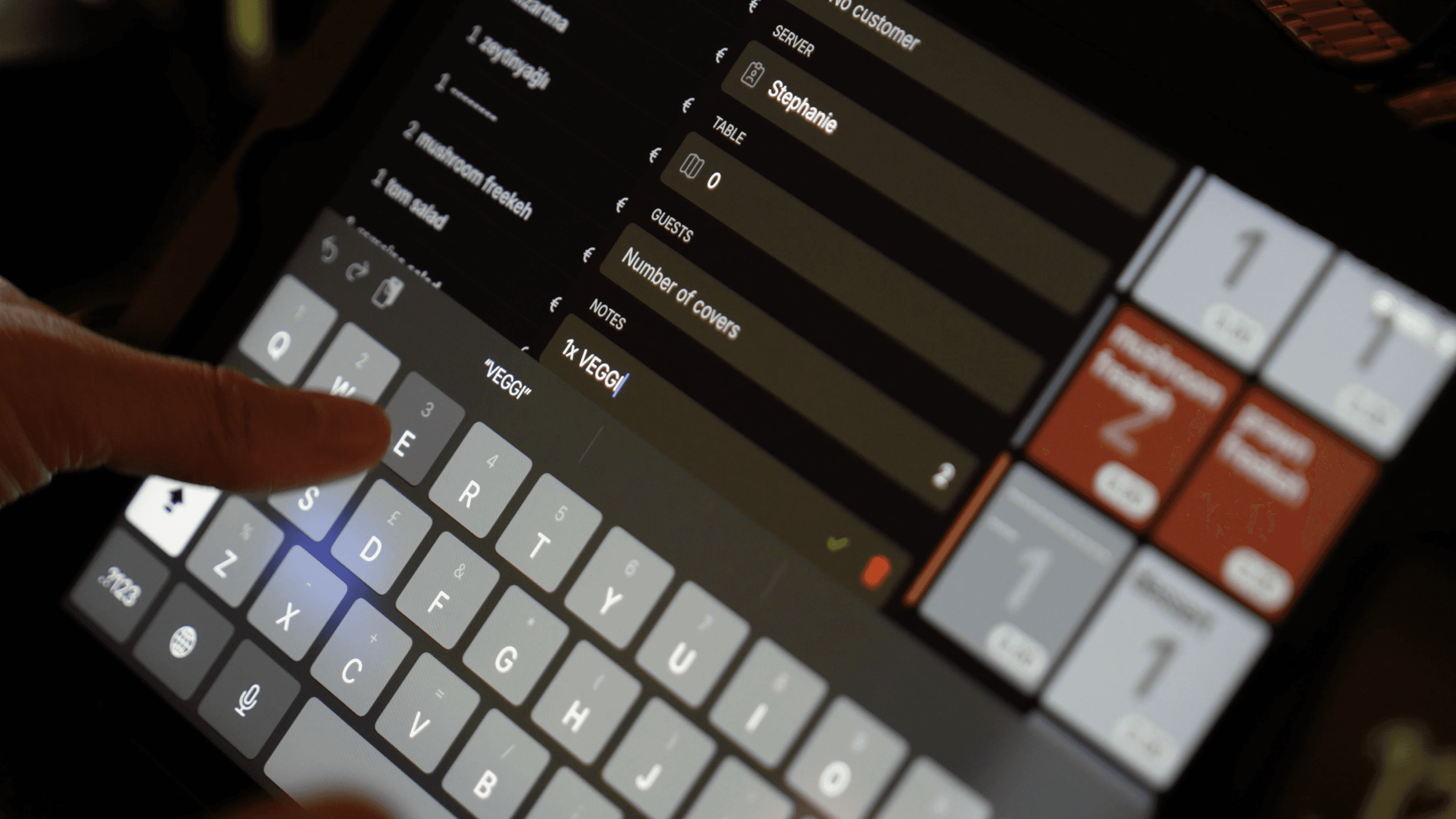
The same habit extends to smaller, more routine requests. Vegetarian and pescatarian notes are flagged automatically in Inbox and printed at the top of every relevant ticket, giving Stephanie a reminder while she's talking guests through the menu and giving Selin the same heads-up the moment an order comes in.
Over a week that might include 120 to 135 covers, Stephanie estimates that adds up to somewhere between one and two hours saved on admin. "We save time," she says, "and it means we can focus on the things that matter — service and cooking nice food — without having to worry we've missed something along the way."
What guests feel, and why they come back
None of this is meant to be visible to guests. "What happens in Inbox, you will never see as a guest," Stephanie says. What she believes a guest picks up on instead is something much simpler — the sense of being looked after.
"People feel seen and recognized and acknowledged. That's the most important thing in a restaurant."
That feeling, she believes, is exactly why regulars keep returning:
"Partly, it's what we do, the food and the wine. Partly, it's how we do it, the personal approach, remembering people's names, what they ordered or what they don't like. Having one location to record that is essential to creating a community of regulars."
If that sounds like the kind of restaurant you're running, or the kind you'd like to build toward, talk to us.
About Tebi
Running a restaurant is hard enough. Tebi makes it easier. One connected system for POS, Reservations, Kitchen Display, Payments, Insights, Inventory and more.